Sankofa’s Child
Poetry Turns My Head Back to the Past so I Can Walk Forward

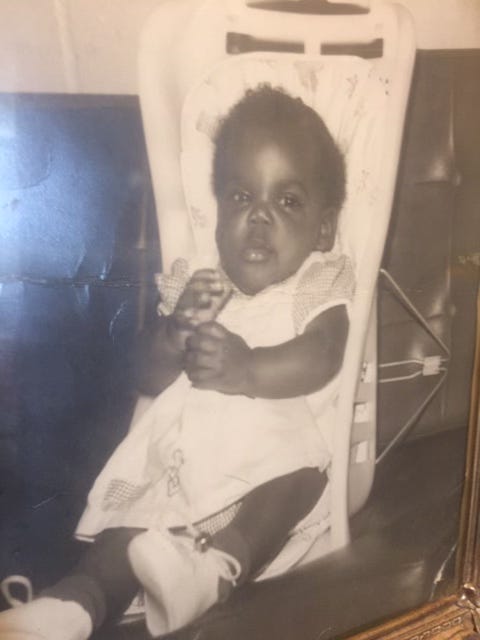
I was a curious child. Even as a baby I had a deep gaze. Mama would tell me as I got older, stop staring into my soul. I am a soul gazer.
History has kept insisting that I turn my head. As a child, I was the curious one—always up a tree or cloud-gazing, always listening to my own beat and dancing to it. I was never interested in being in the “in crowd.” Yet, I was often included because I could run, dance, and dress the part. But truly, I say to you, I lived in other worlds. My head was either in a book or in the clouds.
I was highly sensitive and imaginative, and my family had no idea what to do with me. Sometimes I was called “crybaby” or “fraidy cat” because I was afraid of the dark. Both of those labels could describe me, but no one in my immediate circle understood why I was that way. So there was little consolation.
My brother Willie joined me in my otherworldly ways. We now claim the label BLERDS: Black Nerds. My grandson, Julian is too. His anime and gaming knowledge is unmatched.
Willie and I shared a love of reading comics when we were kids. We were collectors, but mostly we were world-builders. There were no Black superheroes or supersheroes, but we dreamed our way in. Here is a poem I wrote for him.
Click this link: Dissipating
He branched off into backstories and became a sci-fi aficionado. I could not follow him fully into that realm until I found Octavia Butler’s Fledgling.
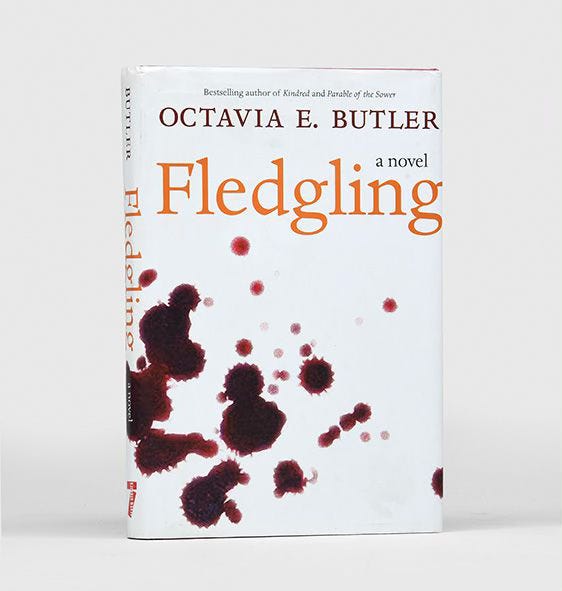
Then I understood: the future was present and real in African American lives. Butler placed us in the past, the present, and the future. I got it. Her books were threads that led me back home.
In my mid-thirties—the age my daughters are now—I learned about Sankofa, the mystical African bird with its head turned back, accompanied by a Ghanaian saying: “Go back and get it.” My whole life I had known something was missing. There was a deep yearning I could not explain. Part of me thought it came from my military upbringing. Yes, I was called a “military brat.” Though born in South Carolina, my formative years were spent on Air Force bases in Tacoma, Washington; Aviano, Italy; and Burlington, New Jersey.
It was in Aviano when poetry and the ancestors really claimed me. In fifth grade—the same age Julian is now—I heard Jackie Earley’s poem “1,968 Winters” at a Black History program. I was snatched in plain sight. Poetry claimed me, too. Here is an essay I wrote about how much this poem meant and still means to me:
Click this link: "1,968 Winters"
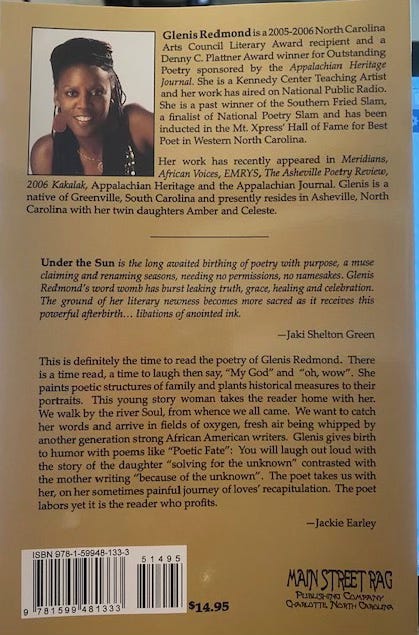
Long story short I was telling this story at author’s event in Florida and a poet, Adrian Castro came up and told me that Jackie Earley was his neighbor and he was going home to tell her how much this poem meant to me. I gave him my address. She wrote to me. She wrote the blurb on my 2nd book, Under the Sun.
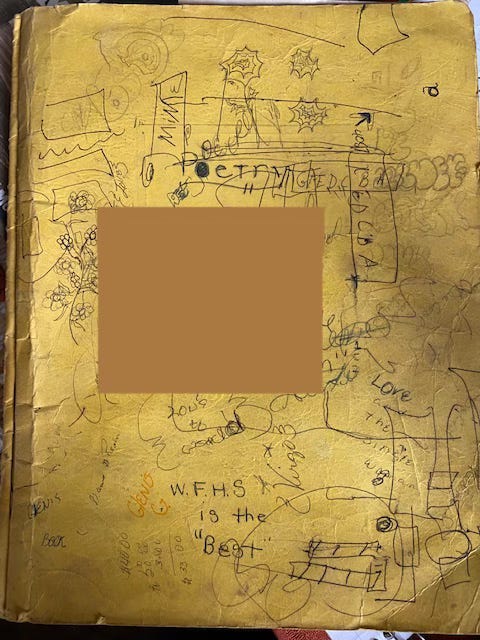
After a brief stint in New Jersey, we moved back to my parents’ native state of South Carolina. The re-entry was rough. Writing in my journal in Ms. Seargeant’s 8th grade English class gave me a voice.
I realized I had always been a curious child, my gaze fixed backward, trying to understand not only how culturally our pieces fit together, but also to find a spiritual gestalt. From the moment I picked up my poet’s pen at age thirteen—writing praise poems for classmates and others at Woodmont Junior High—I was doing a kind of creative cartography, stitching memory and words
.
At the time, I had no idea I was walking in the steps of West African griots. It would be another thirty years, after a DNA test, that I would discover my lineage: my mother’s side from Cameroon and my father’s side from Nigeria. Around that same time, while reading Judith Gleason’s African Praise Poems, I learned that Nigerians are considered the chief Praise Poets of Africa.
My thirteen-year-old self knew. She always knew. The way I dance, the way I write, the way I stare at a person and through the veils—I have always been all in, with my whole self. I remember an older white Southern woman writer approaching me at a writer’s conference in Anderson, South Carolina. “Your poetry is so immediate and urgent,” she said, with accusation in her tone. It was an odd query to me, but I had no desire to unpack what it means to be a Black woman in America.
Each one of my poems was a lifeline to me. They were not written to extend outward to her. I was in the center of my own life, concerning myself with Black history, doing my best to weave myself into being. I was minding my own “Black Bidness.” Yes, my poetry carries universal threads, welcome to everyone. But for me, so much of my history had been eliminated or purposely erased. So when I picked up my pen to write, guess what I have been busy doing? Re-writing. Sewing. Connecting. Looking back.
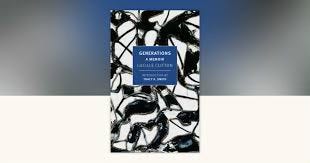
When I found Lucille Clifton—or rather, when her work found me—I could breathe fully for the first time. It was not only her iconic “won’t you celebrate with me” but the whole of her work. More than any other poet on the planet, Clifton pointed me toward home—toward Africa and toward the South, when she wrote of her great-grandmother Ca’line, who walked from North to South. Clifton was not afraid of the mystical either. She is my spiritual poetry mother
I will never be finished writing about the Black experience, history, and ways because they are integral. They are life-giving—not only to me but to others. I am now writing in a time where our history and culture are under threat. But guess what? They have always been under threat. I was born in 1963, when the world was on fire. My parents were born in 1936, in the full grip of segregation. My grandmother Katie Latimore was born in 1901, just thirty-six years after slavery. That means her parents—my great-grandparents—were born enslaved in South Carolina.
As a poet and teaching artist, I have been busy telling the stories of my people and how they made their way on the land. Now, again, people are and the government is trying to wipe our histories away from libraries, museums, and schools. I have always felt this violence and terror. I have carried the constant question: Why are you still here? Why is your spirit so strong and bright?
I have always felt ancestor-led and protected. In times such as these, it is even more important. My work will always be immediate and urgent because even when I write about a sunflower in a field, there is boldness in its bloom. I know what it takes to thrust through the soil, to grow tall on its green stalk, to lift its brown face to the sun, and to mirror its light with bright rays of yellow. It offers sustenance. It offers hope.
It was a field of sunflowers that woke me in a dream when I was thirty. As I approached, I saw in their brown faces of each bloom the face of a Black woman writer: Alice Walker, Toni Morrison, Maya Angelou, Nikki Giovanni, Lucille Clifton, Margaret Walker, and Phillis Wheatley etc... A sea of brown faces beamed at me, saying: Come this way. You will be fed. You will find hope for your journey. You will find a sustaining life as a poet and writer.
I am so glad I have walked the way of a Sankofa Child.
I am so glad I have walked the way of the sunflowers.
My challenges as a supersensitive child became my strength. I need all my feelings to write and to hold empathy. It is not an easy life, but I would not have it otherwise.
In this writing field, I have found golden hope and hard kernels of sustenance, and in return, I have been able to cast some of that light and offer it to others—even in the darkest of times.
That is why every day, I do my best to show up on purpose. I hope that you do too. In what ways did you have to protect your true self as a child? How did those skills manifest into who you are today? Take note. Write it out.
In all the circumstances that brought you here, I hope you are choosing to: Bloom Anyhow!
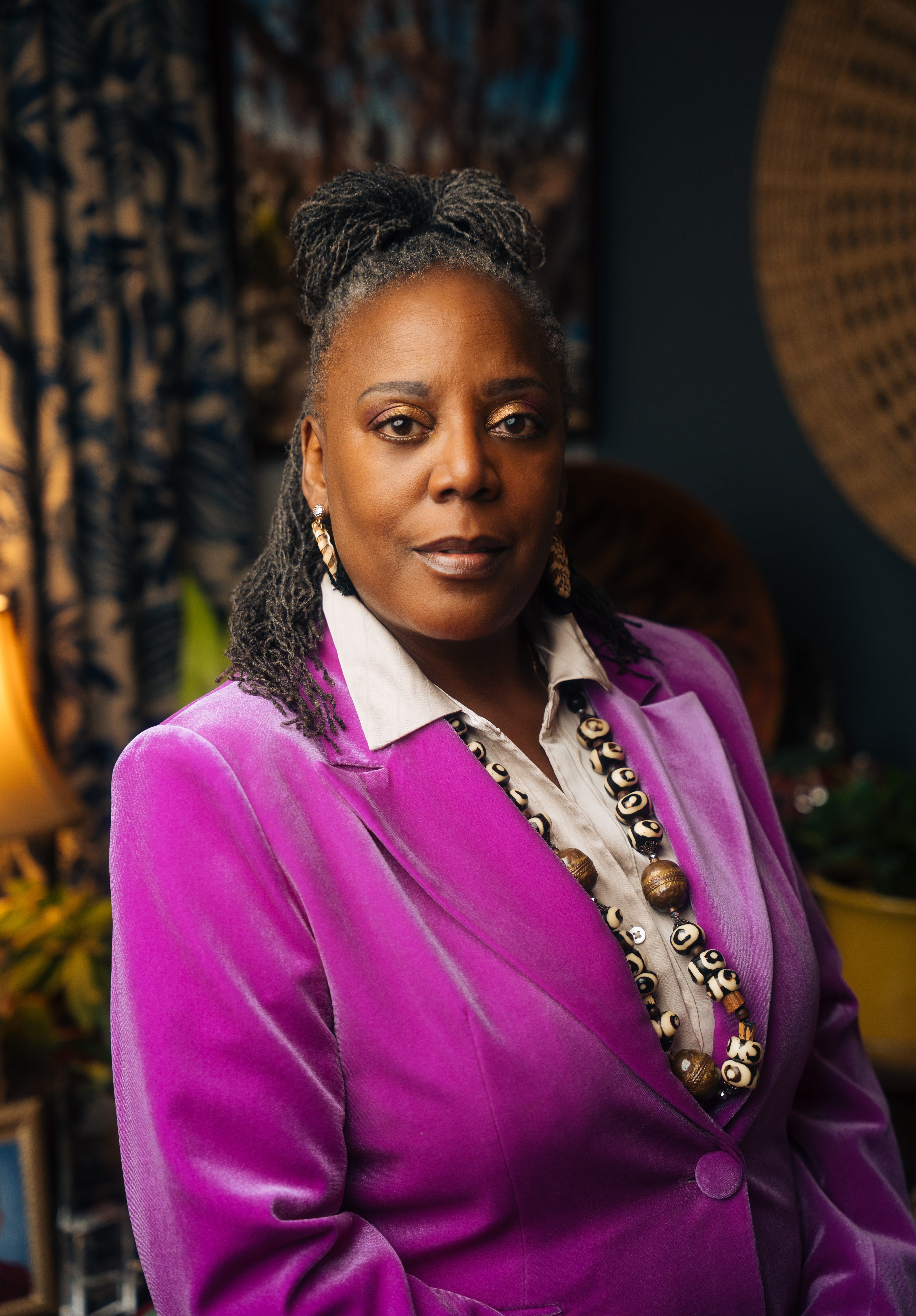
photo credit: Will Crooks.
I love this story. I can feel the pull of your ancestors on you. I can feel your influence and closeness with Julian. I can feel your passion and your vulnerability as you share with us.
Thank you for such beautiful writing.