Good Grief
The Work of The Living


My heart is numb.
Struck dumb.
It has been a difficult week. I keep going because it’s what I do. It is what we all do.
I had a full week—engagements and caregiving. Getting my mother to her three appointments. Getting myself to my three appointments. Not a complaint, just a registering, a full document.
On Friday, I hosted the third Visual & Verse, a program I helped tp curate with Anna Huff in partnership with the Metropolitan Arts Council. It was lovely. Fulfilling. A packed house. I will write more and post later.
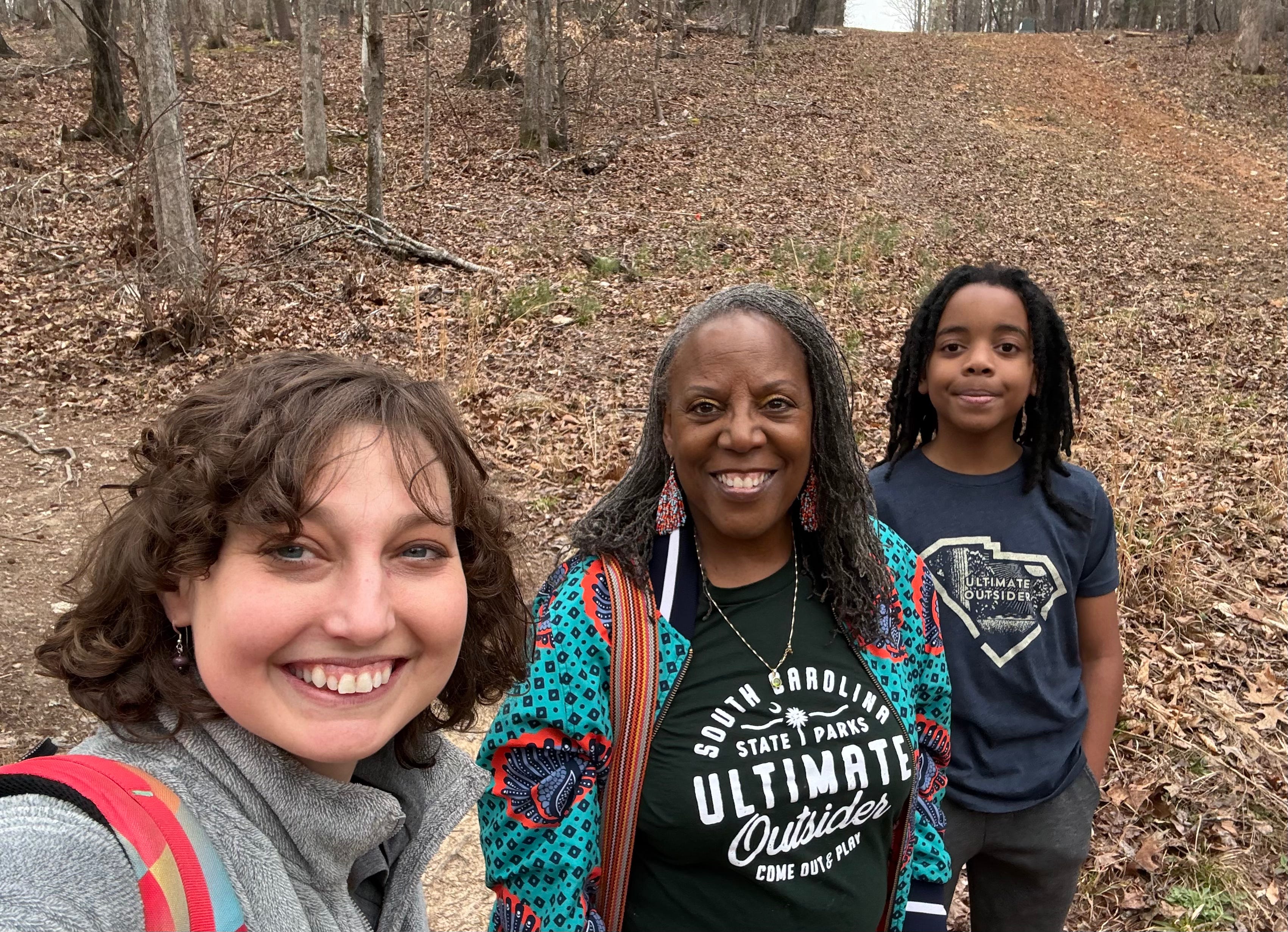
Julian and I returned to King’s Mountain State Park Saturday morning for a surprise reason. I will share more about that too… I know, I’m leaving you on a cliff. Come back for the reveal. Here is a clue with the wonderful Danielle Festa.
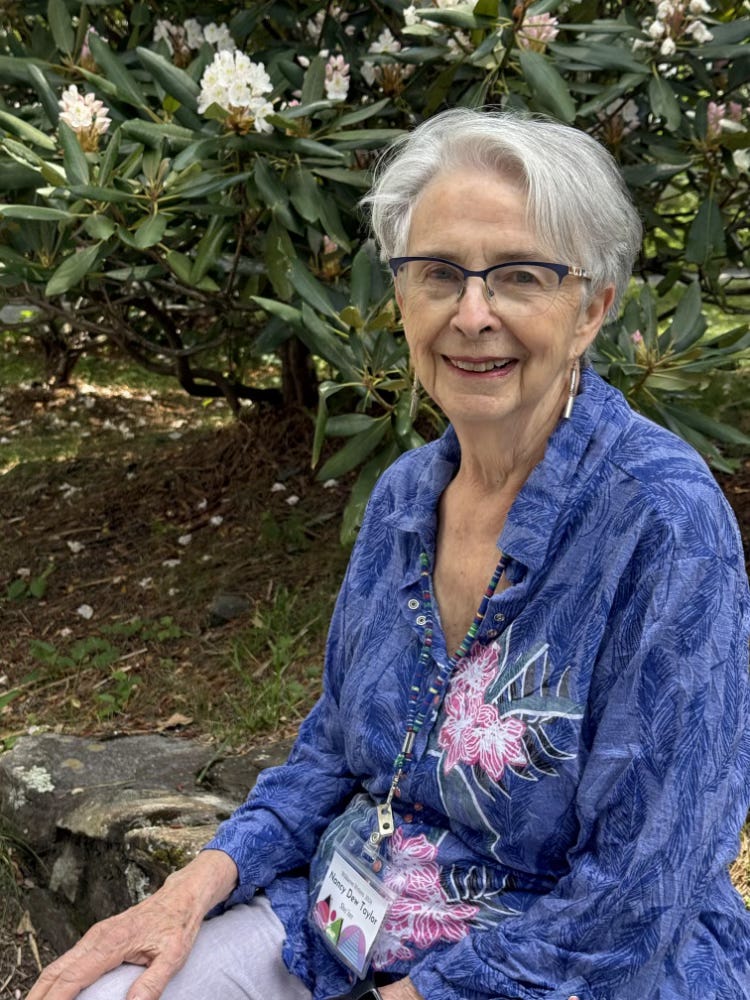
Saturday afternoon, I attended the memorial for Nancy Dew Taylor at Furman University
.
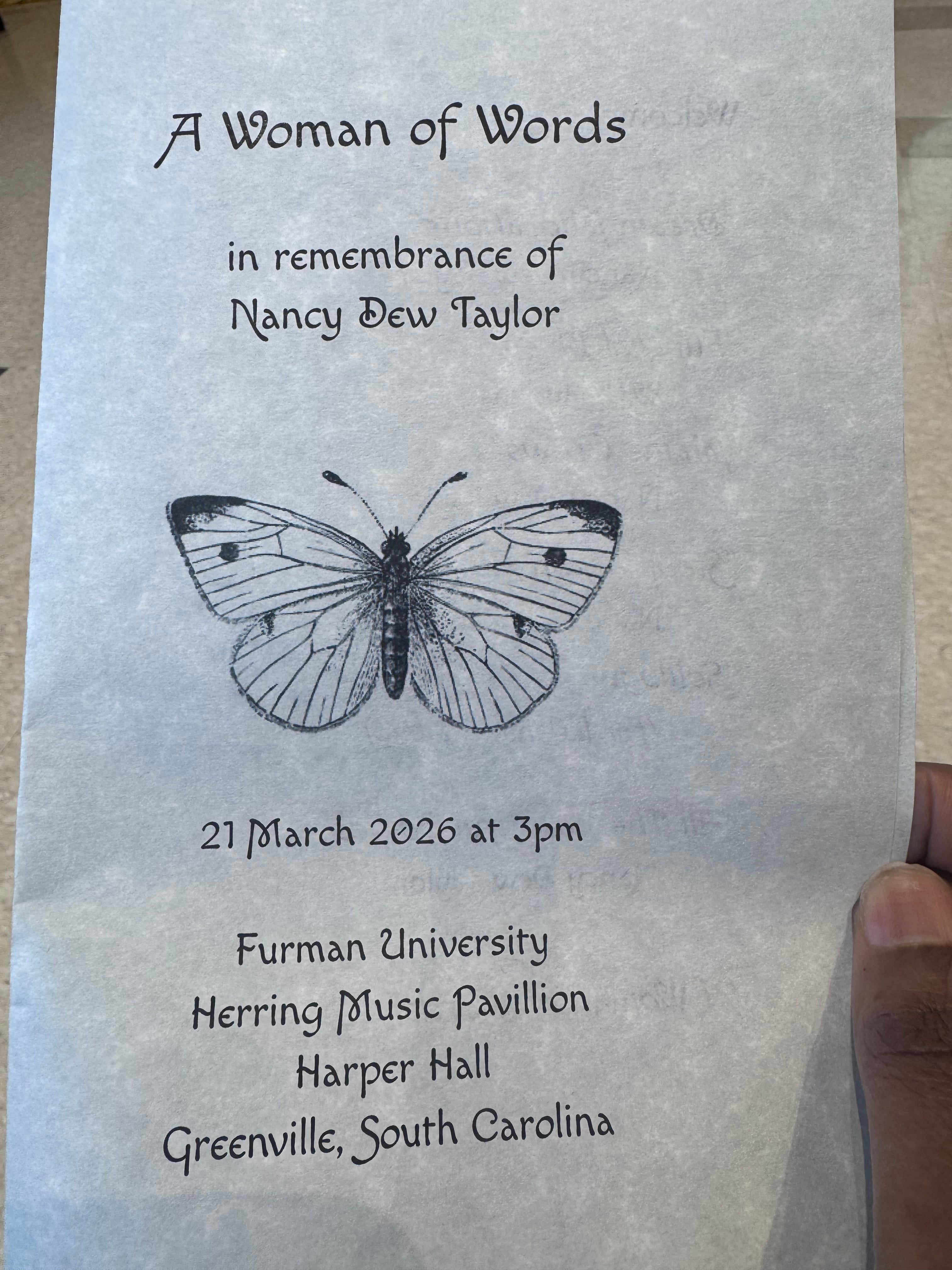
She died in August. I learned of her passing at a conference in October—her niece told me. I am grateful I was included in her memorial.
Nancy was a poetry friend for over 30 years.
I met her 33 years ago when she curated readings at the Greenville County Library. I sat in the front row, like I always do. After the reading, she came up to me and said she was pleased I was there. Later, she told me she thought I was a teenager. I was in my thirties, married, with twin toddlers. I must have looked young in my black leather jacket and braided bob.
We remained friends ever since.
She once asked me to edit her manuscript, Showing Face. She sent me $350 for my work. I had not asked for payment, but she sent it anyway. That was Nancy.
Here is the blurb I wrote:
With a fierce gaze and a deft hand Nancy Dew Taylor illuminates the past. In Showing Face, she embodies how a town can burn both literally and metaphorically. Her poetic endeavor reverberates as a painstaking personal inventory of South Carolina’s heated history. She brings to light many incidents of racial hate by using vivid imagery to make the point: when hate flares it leaves irreparable damage on the psyche personally and collectively. Still, Taylor tends to wounds––busy unfurling and recounting uneasy narratives of her family of origin, of Belle, the family’s maid and onto the greater collective of Lake City. What Nancy did not glean racially, when she was younger, she comes back in order to show face to document her uneasy trek. She does so with a bold vulnerability. She leaves no one unscathed. She highlights history from The White Citizens’ Council coming to town, to George Stinney, the fourteen-year-old executed by the electric chair, to the prominent pastor Joseph Armstrong De Laine—his harassment and ascent. This book reads as a reckoning and also as an apologia to Joseph Armstrong De Laine and to “Belle,” Mabelle Hanna McCray, and to the poet’s younger self. With these poetic visitations, Dew proves that it is necessary to go home again, especially when you show face. Working with memory and ghost, Taylor spurs her own healing and helps others by illuminating South Carolina’s weighted past.
I went to Nancy’s memorial because I want to show face. This is an expression that we use in the Black community. One she heard in her youth and latched onto for her book title. In turn, I wanted to show face one last time for Nancy.
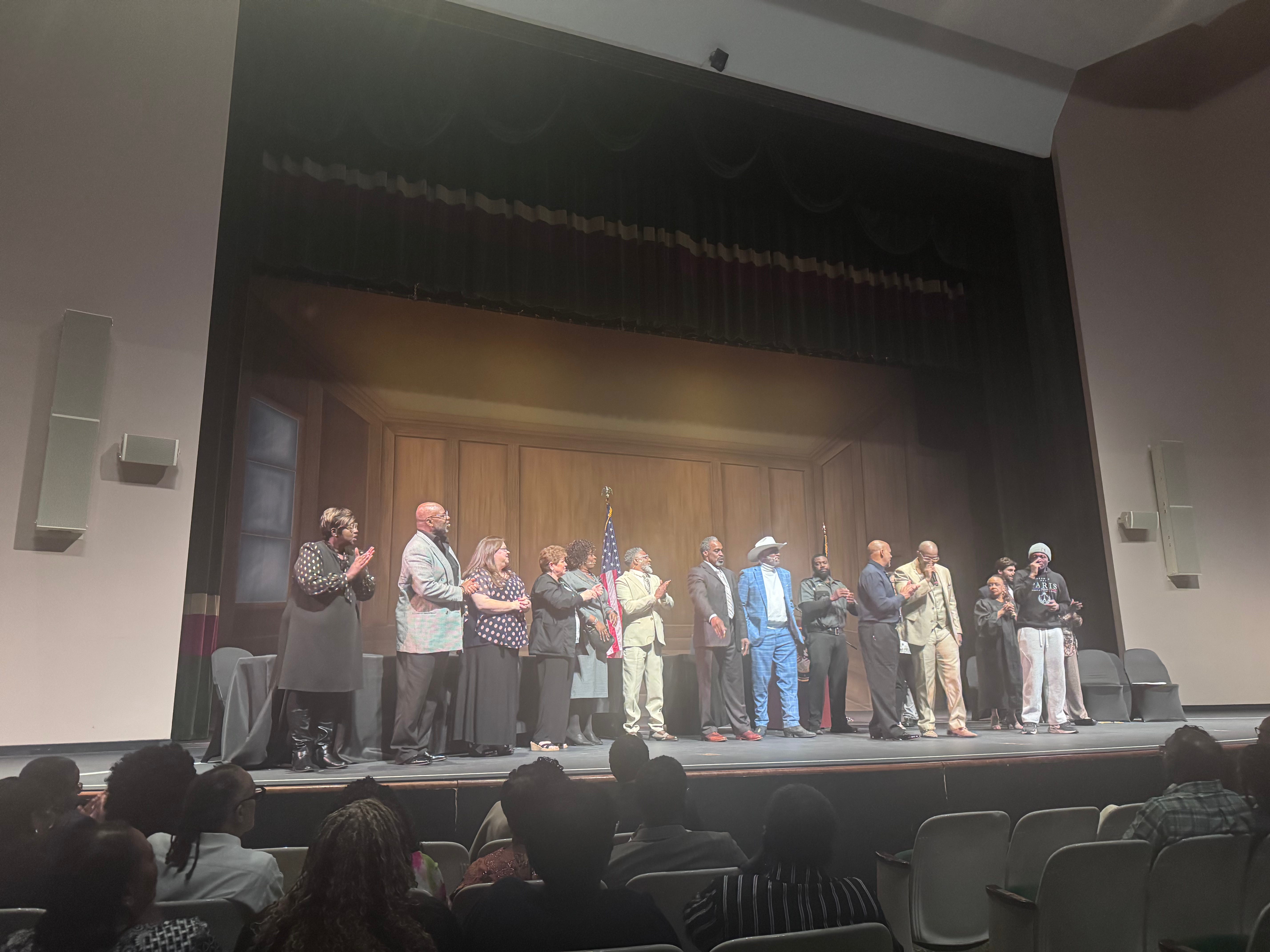
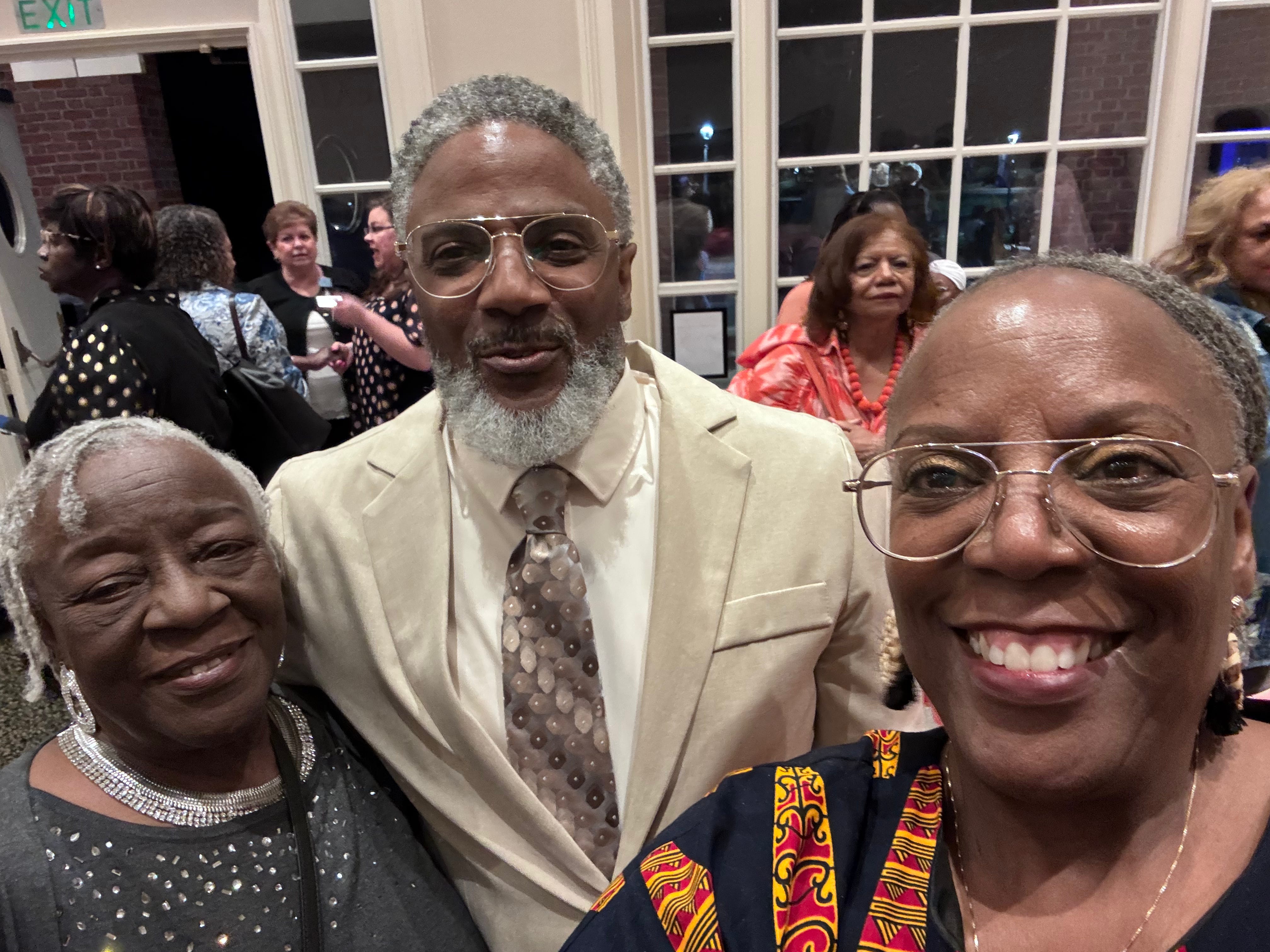
Saturday evening, I went back to Furman University and I was able to see my brother, Jeff Redmond in his debut role as a thespian in Justice on Trial. He was wonderful.
He is in the tan suit in the middle of the photo.
The week was a tough one. It beat me up. Pelted me around. I did my best to dance around the blows with my body on fire.
My spine pain has not been attended to. On Monday, I will have a bilateral epidural for L4–L5. Hopefully, that will tide me over until I can meet with the spine surgeon in mid-April. I am on a waitlist, but my pain refuses to wait. It does not defer.
I keep walking with electrical bolts firing down both arms and both legs.
Wednesday brought the hardest blow.I logged onto Facebook and learned that my friend Jared O’Roark died from a massive heart attack. He was a young man. A friendly soul.

We met at least 20 years ago. He would hire me as a teaching artist and poet to come to Ruth Eckerd Hall in Clearwater, Florida for poetry residencies. He was kind, clever, and funny. We did not see each other much, but when we did, we clicked.
He reached out to me several months ago to ask me to come to Ohio for a conference. I told him I don’t travel much anymore due to my health, and my fee was significantly higher than the time he used to hire me. Long story short, I didn’t go. You never know when an interaction will be your last. To find out Jared died of a massive heart attack took my breath away.
I thought of this poem by Langston Hughes:
I loved my friend.
He went away from me.
There’s nothing more to say.
The poem ends,
Soft as it began,—
I loved my friend.
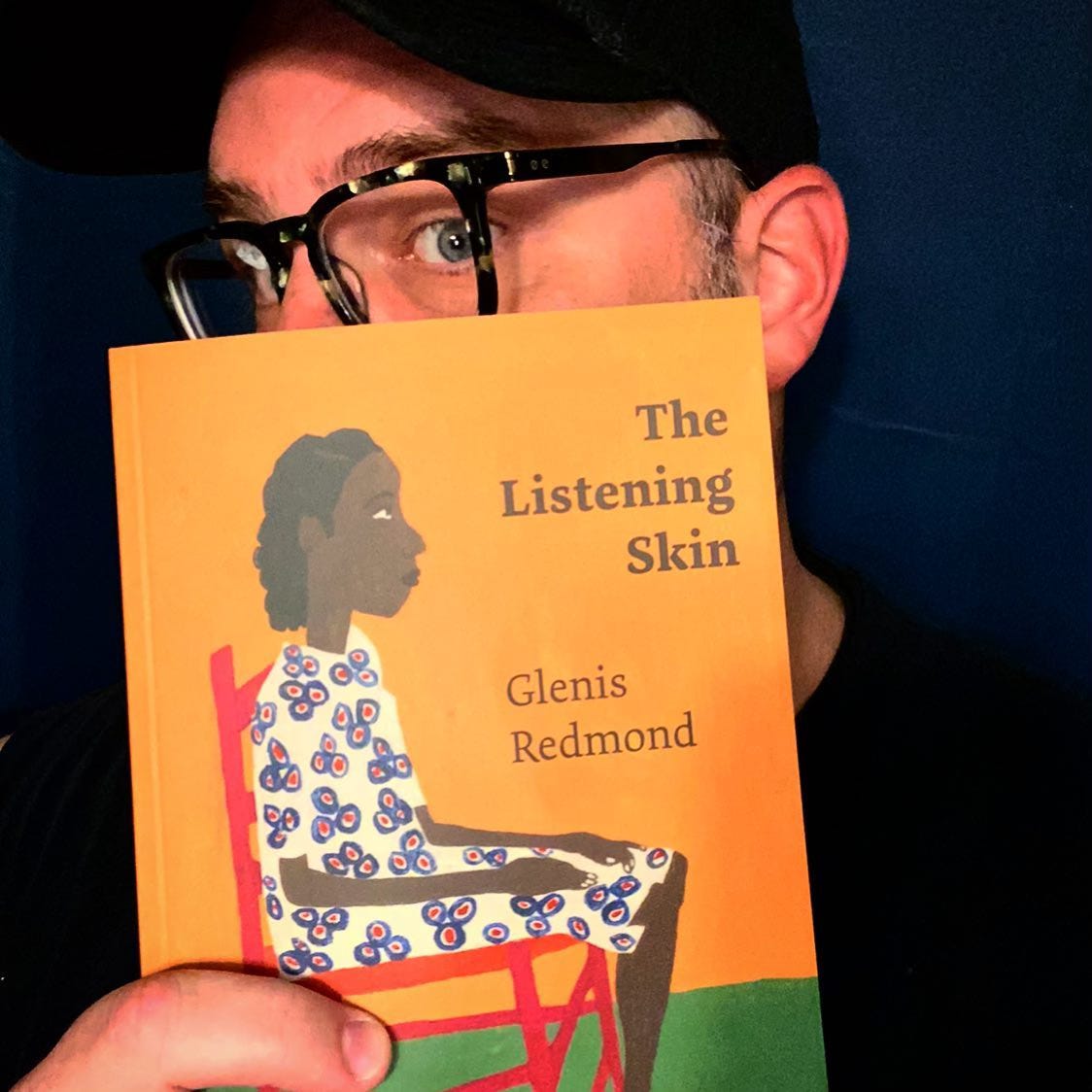
When I was really sick, Jared crocheted this orange scarf for me. It is pictured at the beginning of this post. A beautiful extension. He also bought my book when it came out.
This is what I know—it is a privilege to grieve. It is a testament to being alive. A document of love. The register is charged because it hurts. Deeply. I never know what is around the turn. But beauty is there always: I get to round the bend to witness whatever life brings.. I am here for it—even in deep mourning.
Facing death has taught me, I will be about living and being a witness to both joy and sorrow, though it seems that my heart is at capacity for grief. I can bear grief. I can hold grief. Though I am pressed to find the good sometimes.
But it is there. I have to train both my heart and my eye to see it. I hope you do to because these moments of joy are meaningful. They matter. Especially during times of grief. This is why I say as a mantra: Bloom Anyhow!
“Bloom Anyhow”