Always A Maker Bee
Maker. Collector. Art Appreciator

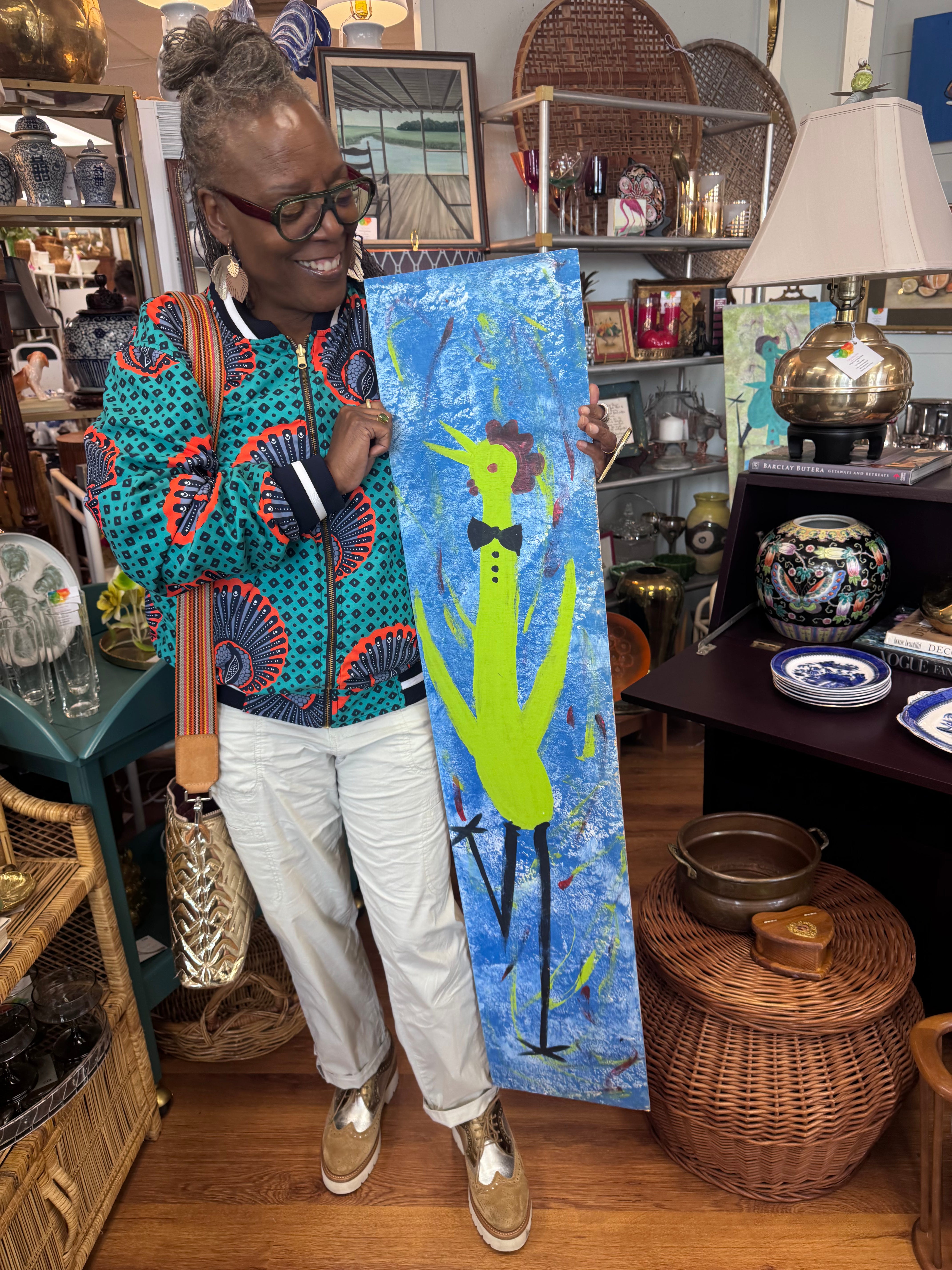
At Cottage Grove looking at another Ernest Lee. I did not purchase it, but I wanted it.
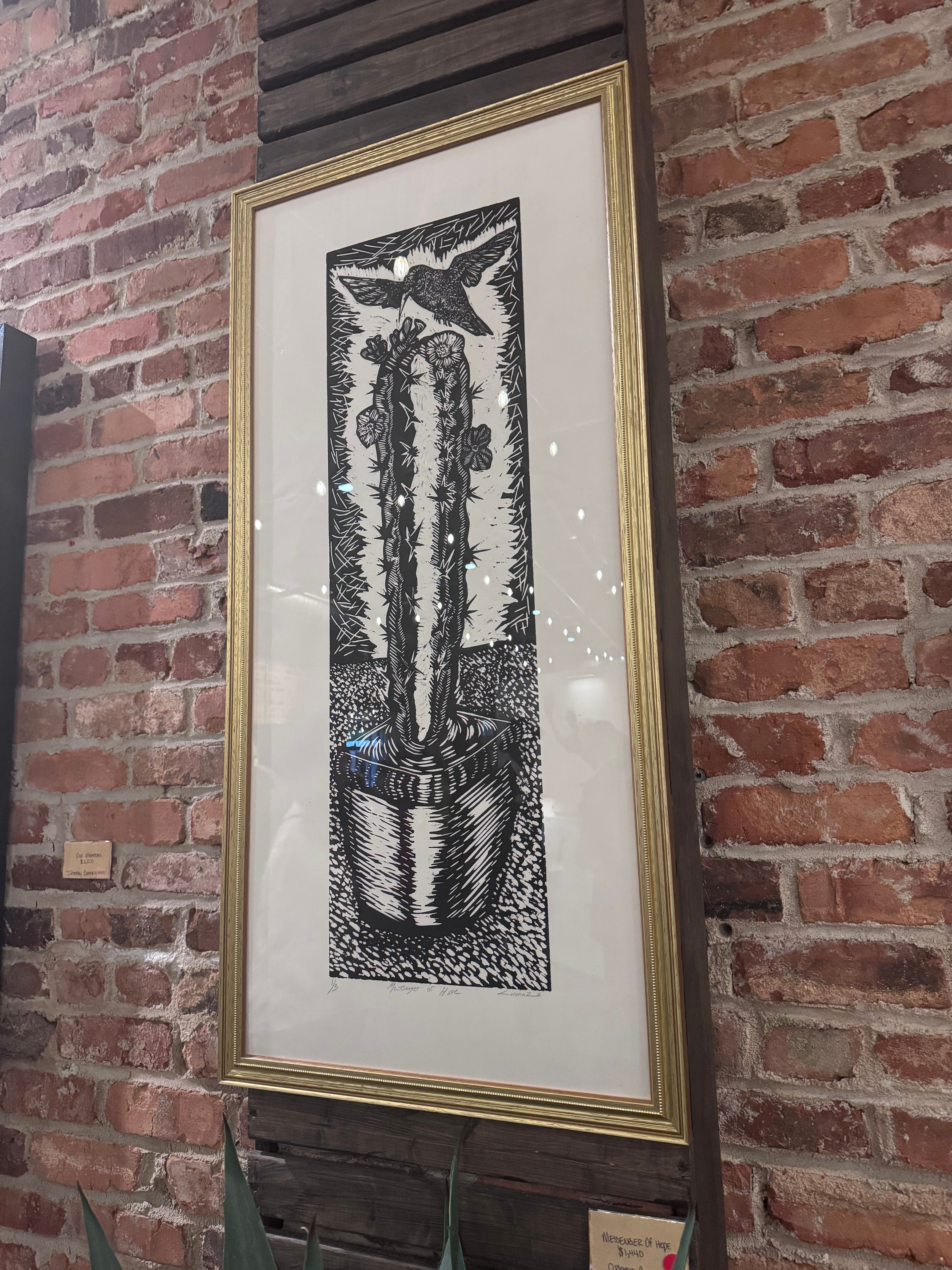
I was invited to read poems at Greenville Through a Lens on April 25th. This wonderful event is the brainchild of Timothy Cunningham. It featured himself, PHOR, Orlando Corona, RaAmen Stallings, Peggy Dillard-Toone, Corrigan Cunningham, and Lloyd Toone, with poetry from Dove Dupree and me.
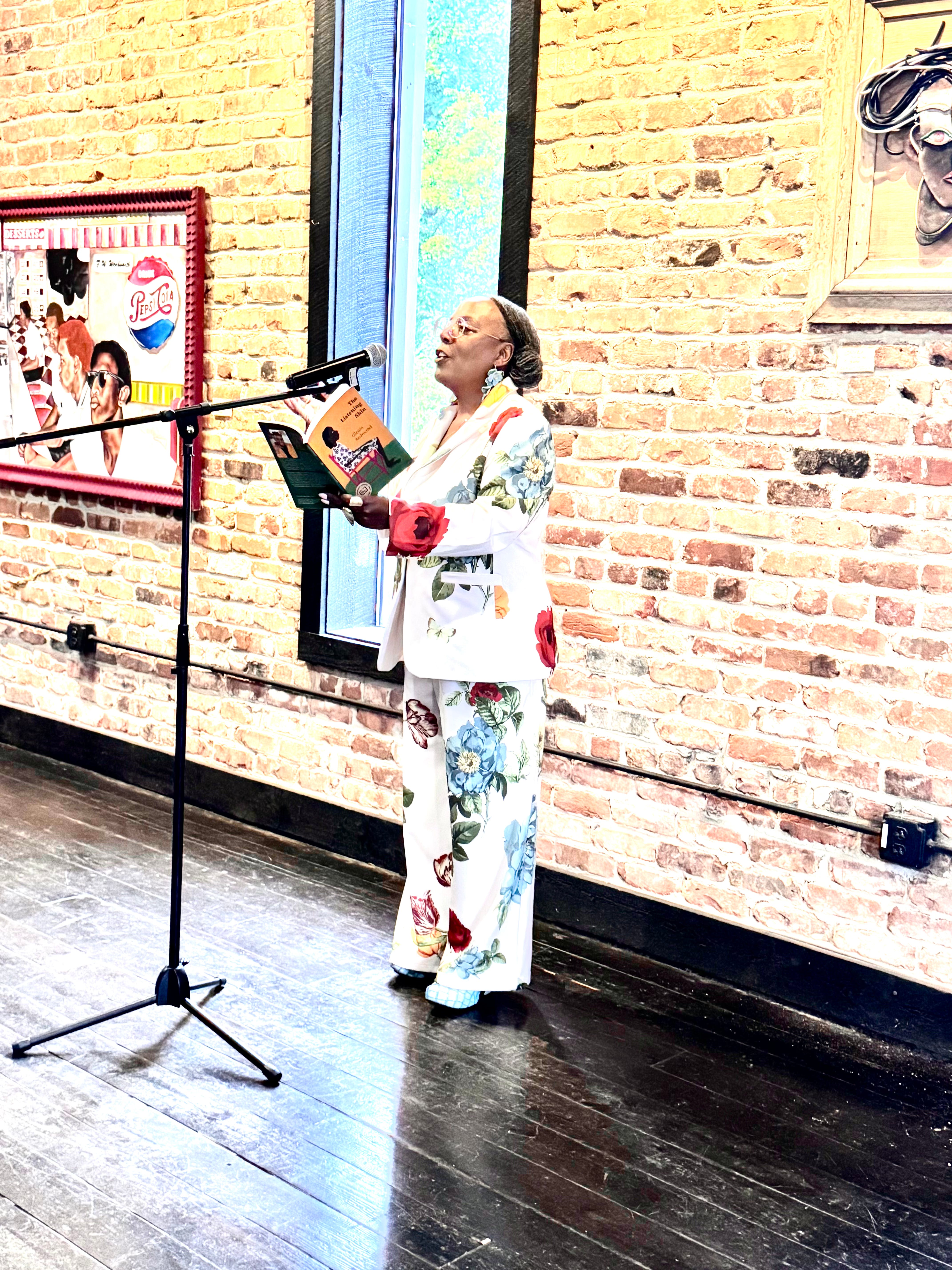
I love art. I have always loved art in every form: dance, music, poetry, film, and the visual arts. I especially love art made by South Carolinians. I was pleased to spend time talking with the artists and making connections, as this was a night to celebrate the bridge between the Black and Brown Diasporas. I had two sets and began with two poems rooted in my own lineage, including “When Mama Dreams of Fish,” a poem about Black folk superstitions. The audience knew what to do with this call and response poem. The talked back. The second poem that I did was “What My Hand Say,” a poem for my great-grandfather Will Rogers born in 1860s. Born right after slavery and could not read or write.
What My Hand Say
For great-grandpa, Will Rogers,
Born in the 1800s
My hand say, Pick, plow, push and pull,
’cause it learned to curl itself around every tool
of work. The muscles say, bend yourself like the sky,
coil blue around both sun and moon.
Listen, my back be lit by both. My hand
got its own eyes and can pick a field of cotton
in its sleep. Don’t mind the rough bumps—
the callused touch. I work this ground
like it was my religion and my hands
never stop praying. Some folk got a green thumb,
look at my crop and you’ll testify my whole hand
be covered. I can make dead wood grow.
I listen to my hand, it say, Work.
My hand got its own speech. It don’t stutter,
it say, Work, Will. Though it comes to mostly nothin,
this nothin is what I be working for.
Come harvest time I drive the horse
and buggy to town. Settle up.
This is where my hand loses its mind,
refuses to speak.
Dumb-struck like the white writing page.
The same hand fluent on the land,
don’t have a thang to say around a pen.
The same fingers that can outwork any man
wilts. What if I could turn my letters
like I turn the soil? What if I could
make more than my mark, a wavery X
that’s supposed to speak for me?
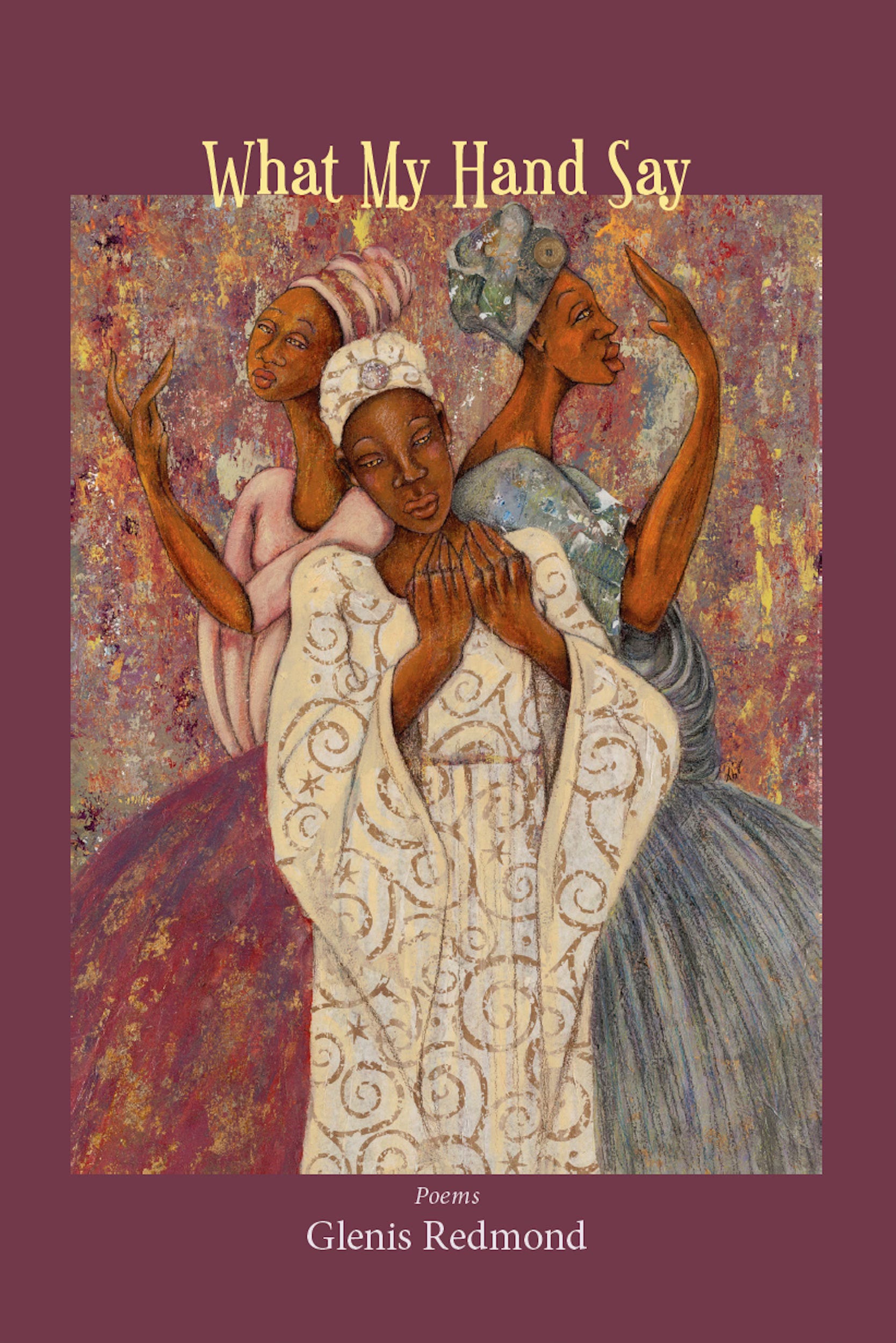
I had first seen April Harrison’s work in the 1990s at the Coffee Underground. I made a promise to myself that when I finally made some money, I would buy a piece of her art. The painting I bought was Behold His Face, it became the cover of What My Hand Say, the title of my third book of poetry.
Orlando one of the artists, came up to me afterwards and showed me his work. He said, “Your poem for your great-grandfather reminded me of my grandfather.”
In my persona poem, my grandfather speaks of how he could not read or write but he was intelligent. His literacy was in the land.
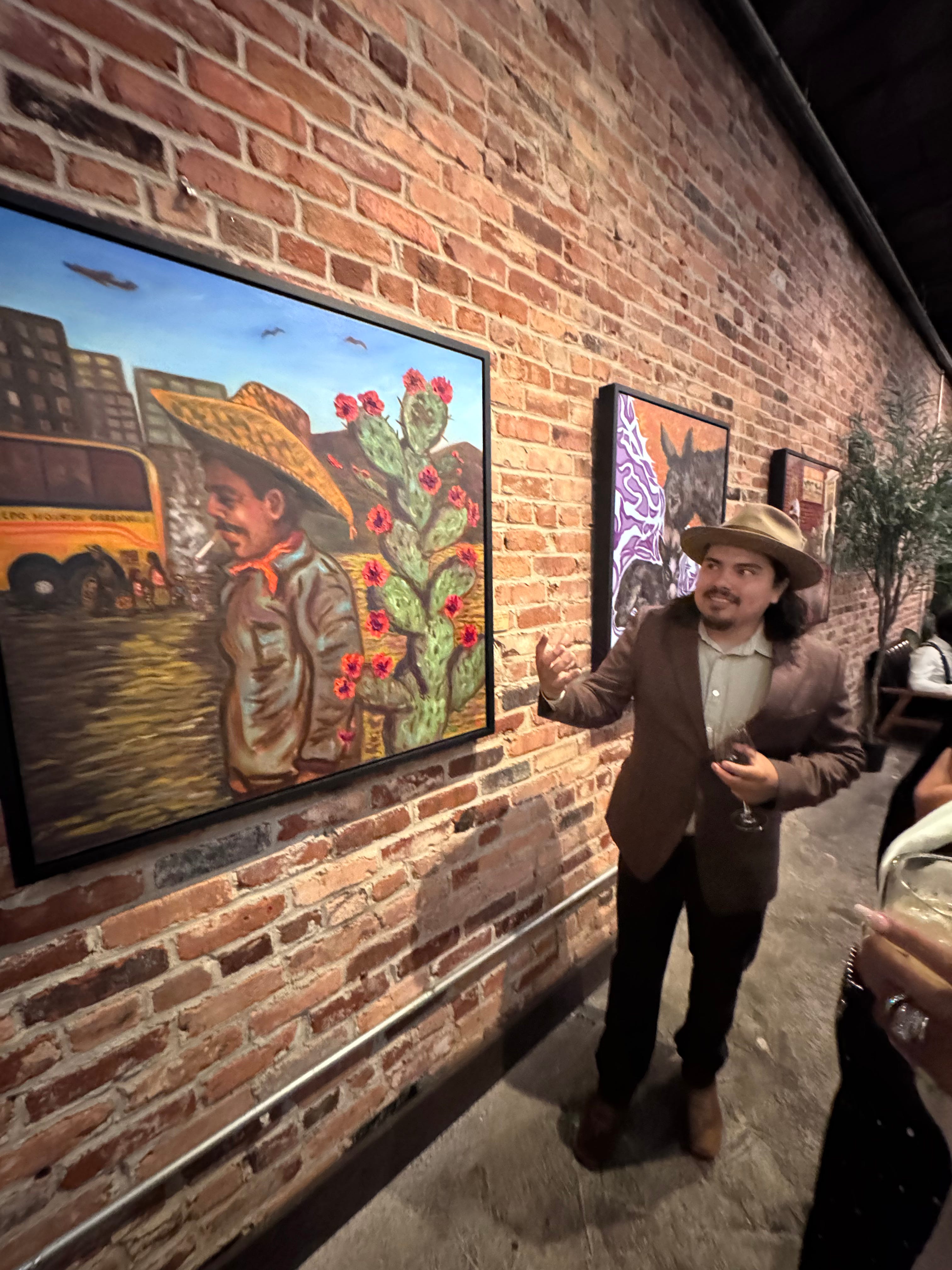
I love Orlando’s work. I hope to own one of his pieces one day.
One of the highlights of the evening was meeting Peggy Dillard-Toone and Lloyd Toone, two South Carolina artists living in New York and passionate collectors themselves.
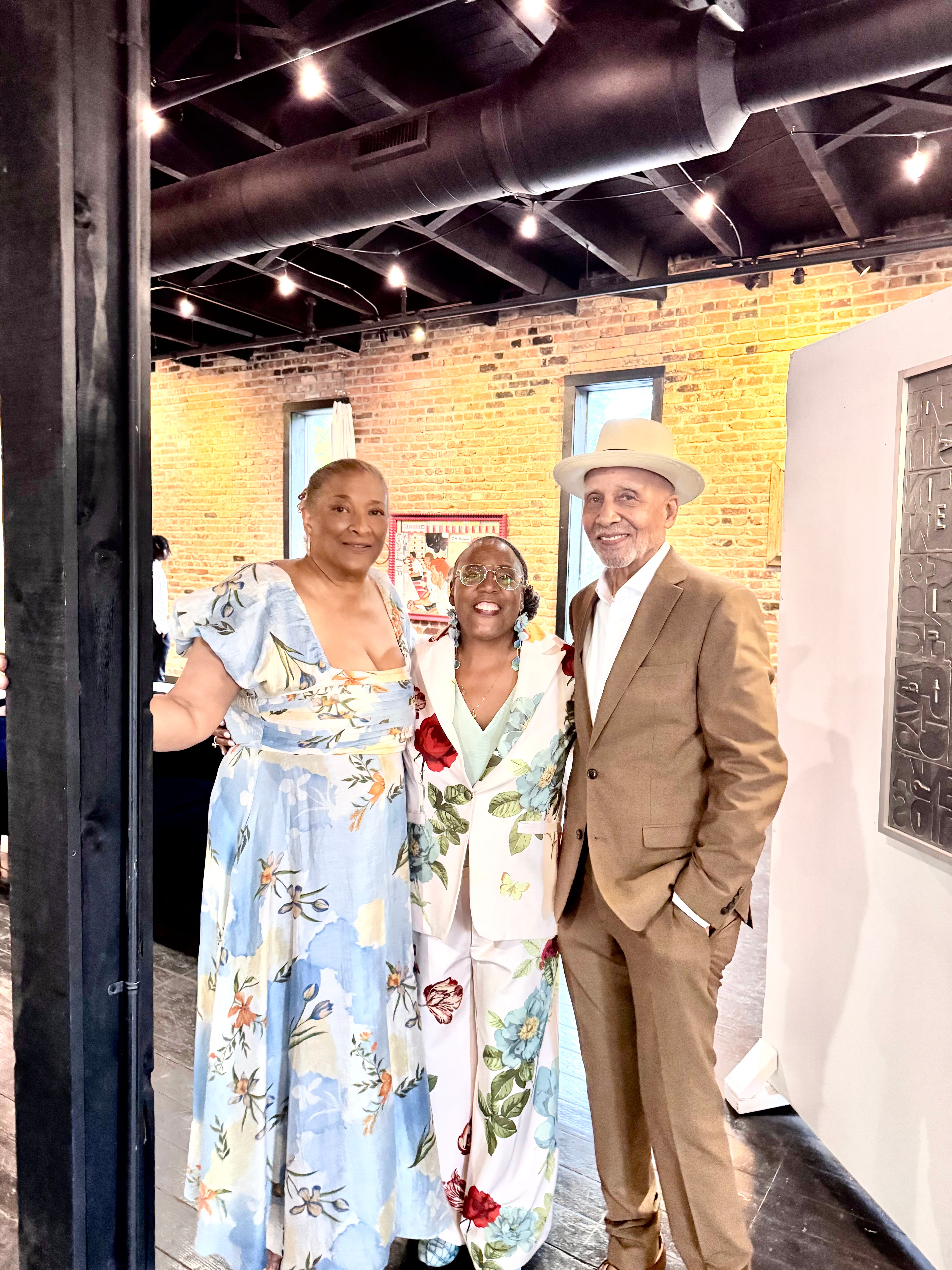
It was wonderful to talk with them both. I have been following them for years. Oh, to own a Toone.
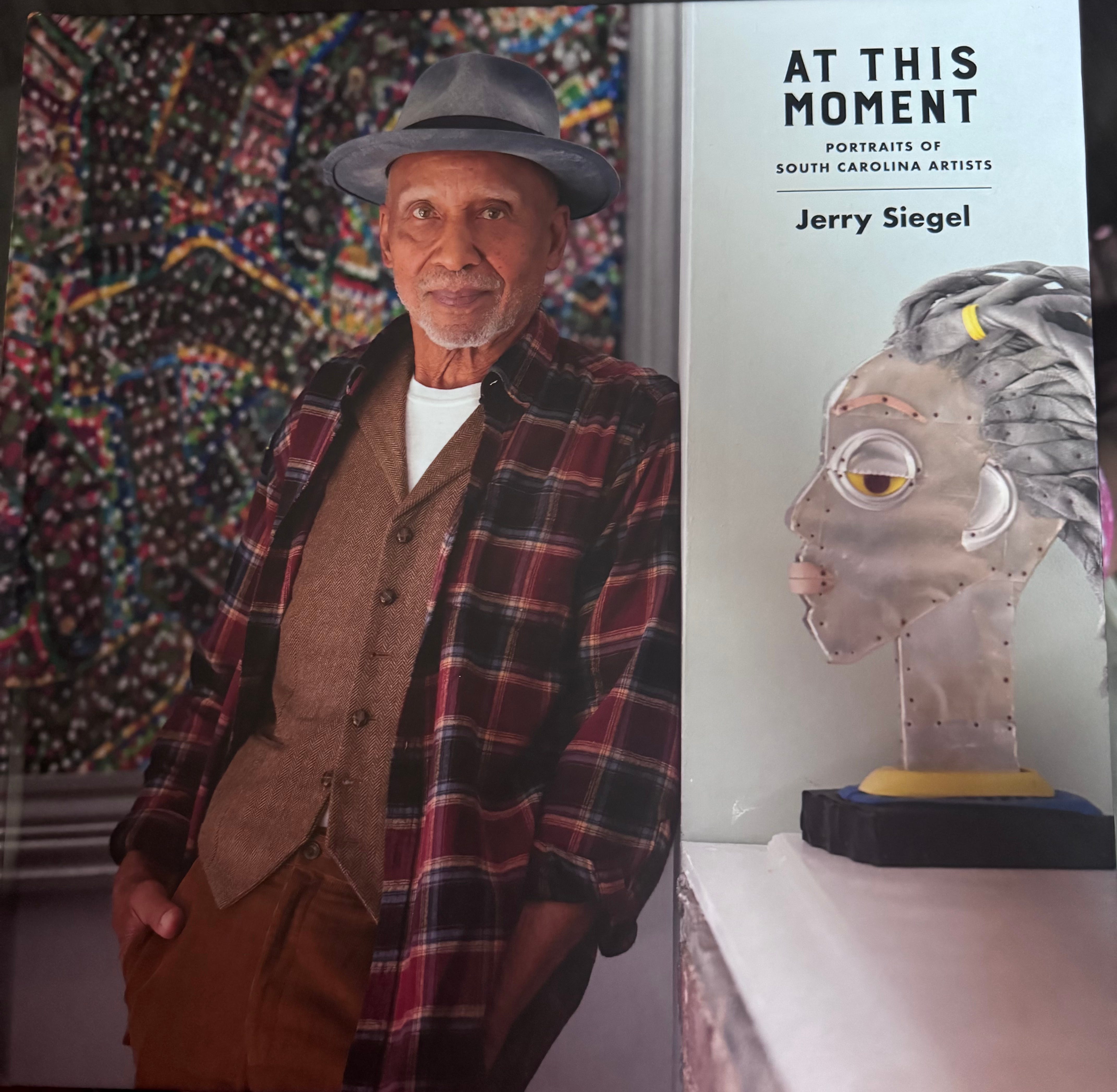
Last week when I was at GCMA for a meeting, I mentioned I was at an event and I let Lloyd Toone, Tom Styron the director gave me this book. This is the way of my walk. Synchronicity and grace.
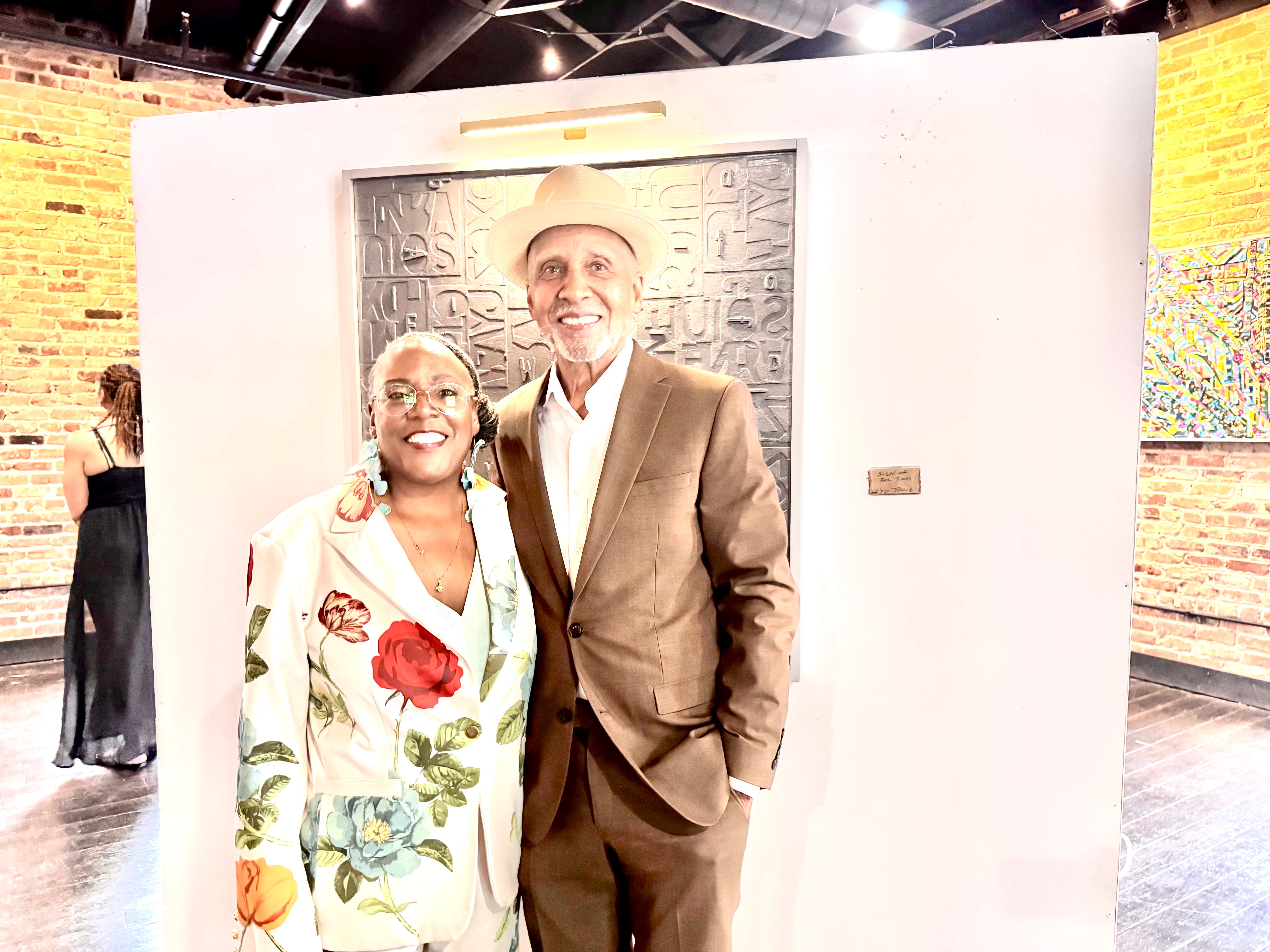
We connected because we both love fashion. He is quite dapper. We are posing in front of his piece: Sign of the Times.
I began collecting art in the 1990s. When I left the counseling field in the early ’90s, I thought I might become a visual artist as well as a poet. During that time, I painted murals for the children in my family, beginning with my own daughters’ room. I painted a Sesame Street theme for Amber and Celeste when we lived in Mauldin. Later, when we moved to Simpsonville, I painted a Precious Moments theme. For my nephew Brock, I painted Mickey Mouse across his walls.
At the same time, I was also writing Praise Poems for babies being born and for young people graduating from high school. I love art—savoring it, taking it in, and making it. I have always piddled. Creating was a way to settle my thoughts and navigate a state that did not always make space or place for me. My mother still has most of my earlier works. Here are a few.
Here are some of my earlier renderings.
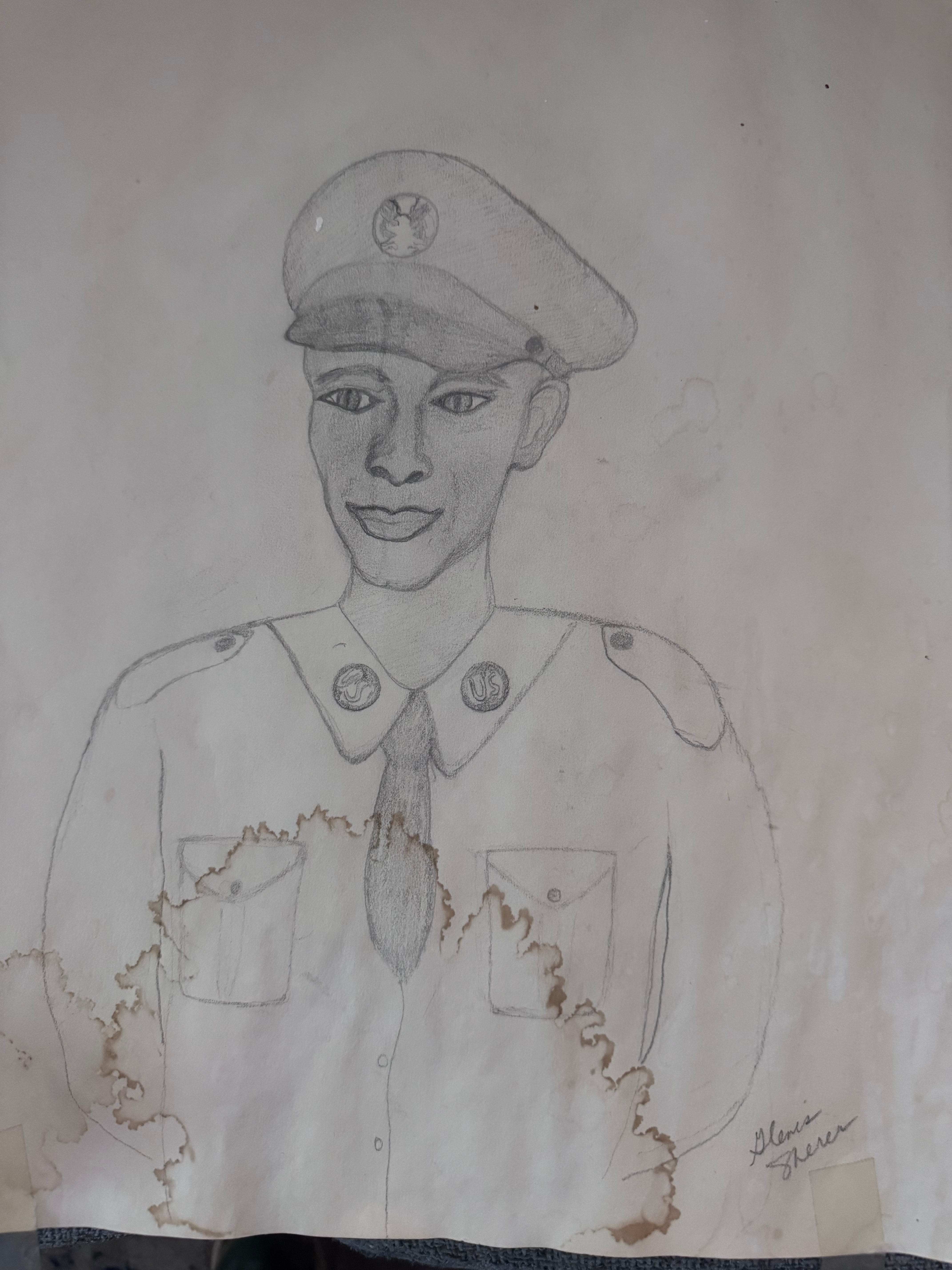
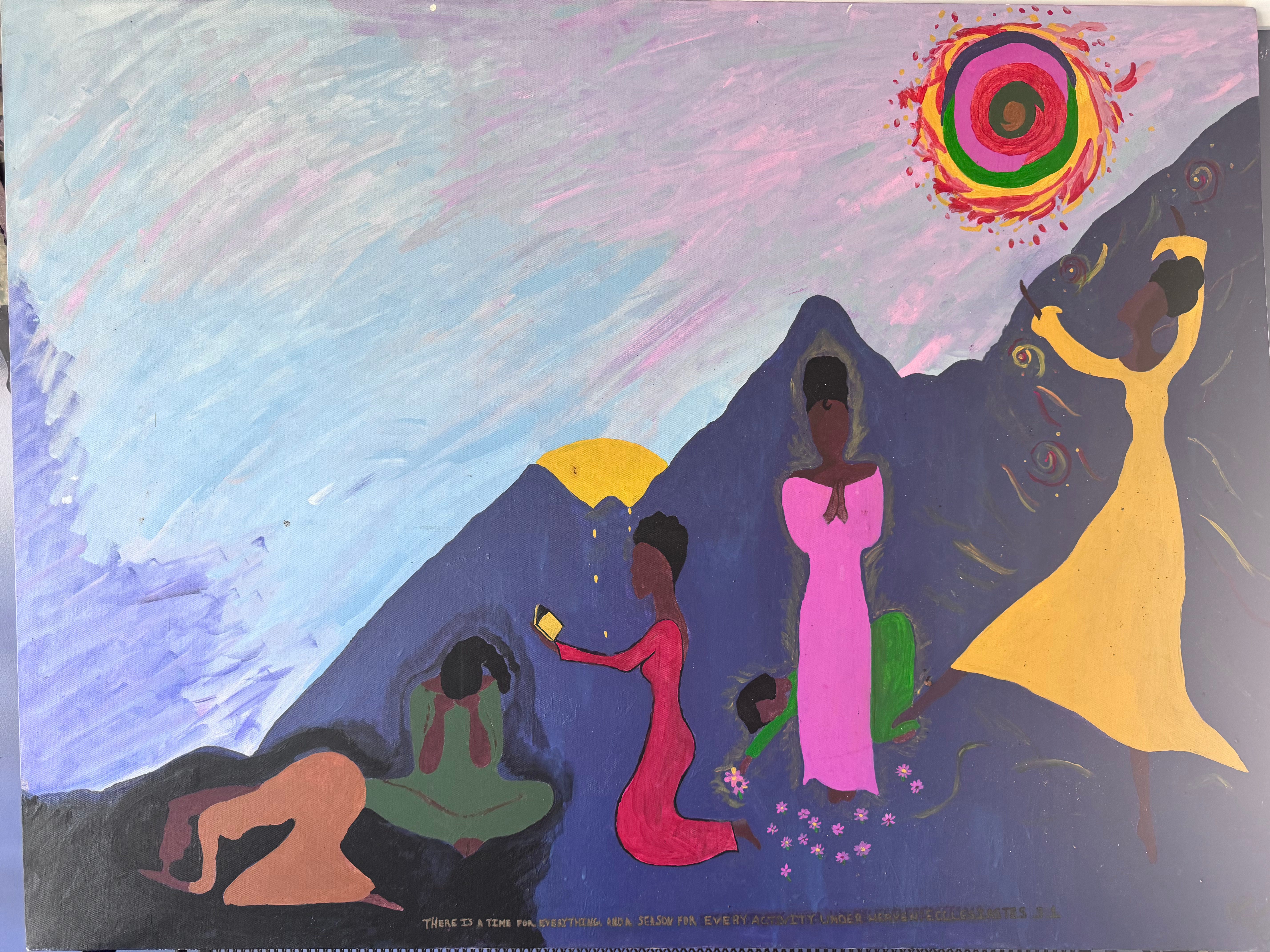
When I was fifteen, I spent countless hours at the library and at The Open Book at McAlister Mall. I sought out fine art films on my own, sitting by myself, munching on popcorn while taking in the storylines. At that time, I did not have many people to talk with about my love of the arts. I come from a creative family rooted in music and singing, yet I ventured beyond those forms. I often felt like a loner and an outsider.
This is to say, I have never stopped being a creator and making things. They are not for sale but are part of how I process the world. It is only within the last ten years that I have felt comfortable calling myself a collector and a maker.
I am pleased to claim those titles now. I am included in an exhibition at the Turchin Center for the Visual Arts at Appalachian State University. It is titled belonging to place: The Creative Community & Artistic Legacy of bell hooks is a contemporary art exhibition exploring community, artistic legacy, and the concept of belonging through the lens of the late writer and cultural critic bell hooks. The exhibition runs from May 1, 2026, through October 3, 2026, in Gallery A. Here are my pieces:
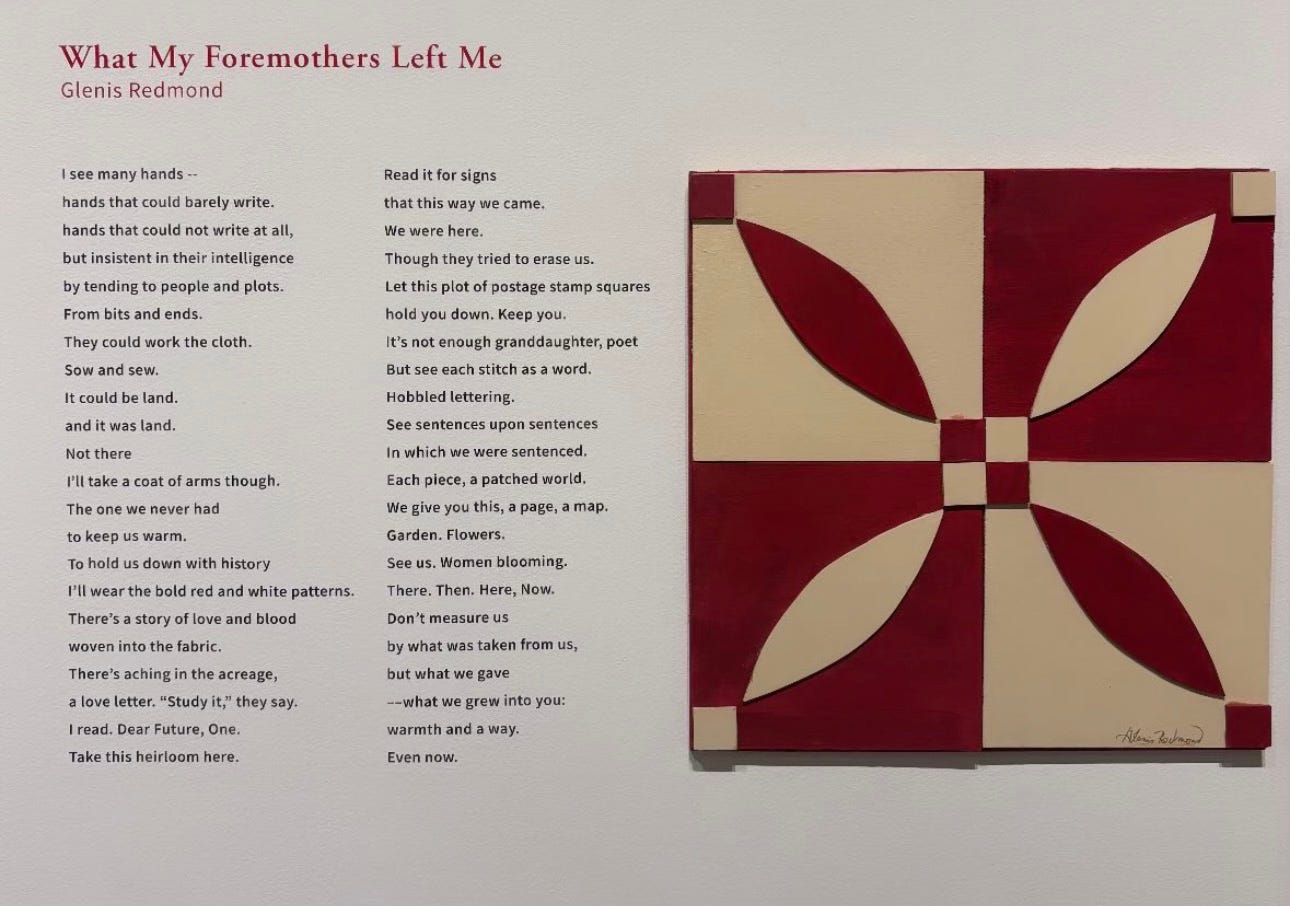
My art skills have grown since the 90s. The poem is “What My Foremothers Left Me” accompanied by my AfroCarolina Quilt Square. I got the idea from the Amish Quilt Squares on barns. I would see them when I would drive on highway 81 while on poetry tours. My friend Bob Ripley helped be cut the pattern pieces. This quilt is modeled on my great-grandmother Rachel’s quilt.
Always a Maker Be
Art has always been one of the ways I have survived myself and this world. Before I ever called myself a collector, I was gathering beauty. Before I understood lineage intellectually, I felt it spiritually through color, music, story, gesture, fabric, film, poetry, and paint. Art gave me another language when the world around me often felt too sharp, too narrow, or too silent.
Looking back now, I see that I have always been making altars of attention. Murals on children’s walls. Praise Poems for births, deaths and graduations. Poems for ancestors whose hands knew the land better than the page. I understand now that creativity was never a hobby for me. It was a way home.
What moved me most about Greenville Through a Lens was not simply the beauty of the work, but the gathering itself—the exchange of stories, memory, and recognition across communities. Art reminds us that we belong to one another. That there are literacies beyond institutions. That some people read the land, some read color, some read rhythm, and some read silence.
I have spent my life making things out of what was available: language, paint, grief, joy, memory, red clay, story, longing, praise. Even when I did not yet know what to call myself, my hands already knew.
Always a maker be. Bloom Anyhow!
The poem reminds me of my grandparents and and my wife's parents. Thanks for this 🙏🏾✌🏾
I always appreciate the myriad ways you bring art to us. Thanks.